
A Security Tool Can Send an Alert. It Cannot Make a Business Decision.
Most business owners do not wake up thinking about endpoint protection, firewall rules, email filtering, or vulnerability patching. They think about customers, employees, operations, revenue, and keeping the business moving. That is why many companies looking for cybersecurity services Des Moines start by buying software. It feels practical. It feels fast. It feels like action. But cybersecurity software is not the same as cybersecurity peace of mind.
A tool can detect suspicious activity, but it cannot fully understand your business risk. It can flag an alert, but it cannot decide whether that alert affects payroll, customer data, remote access, compliance, or business continuity. It can help block threats, but it cannot replace strategy, monitoring, employee awareness, access control, backup planning, and expert response That is the difference most businesses miss. Cybersecurity software is a component. Peace of mind comes from knowing the entire security environment is being managed with discipline.
The False Comfort of “We Already Have Security Software”
Many businesses believe they are protected because they have antivirus software, a firewall, or built-in security tools from a cloud platform. Those tools matter, but they do not automatically create a secure business. A company can own strong tools and still be exposed because of poor configuration, weak passwords, untested backups, outdated devices, unmanaged users, or ignored alerts.
This is where the false comfort begins. The business has purchased protection, so leadership assumes the risk is handled. Employees continue working as usual. New accounts are created. Former employees leave. Devices age. Remote users connect from different locations. Cloud folders grow. Vendors get access. Software updates are delayed. Over time, the environment changes, but the original security setup may not evolve with it. Cybersecurity is not a product that can simply be installed and forgotten. It is an active process. If no one is reviewing alerts, managing access, testing recovery, checking configurations, and updating defenses, the business may only have the appearance of security.
What Cybersecurity Software Does Well
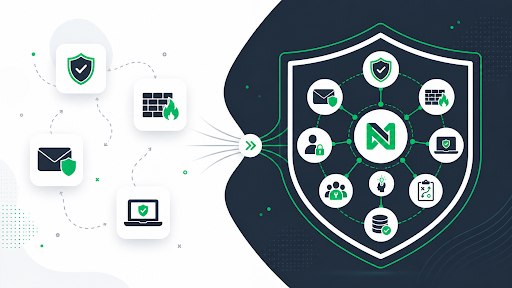
Security software is still important. A responsible cybersecurity strategy needs tools that can help detect, block, monitor, and reduce threats. Endpoint protection helps defend laptops, desktops, and servers. Email security helps reduce phishing and malicious attachments. Firewalls help control traffic. Multi-factor authentication makes stolen passwords less useful. Backup tools help protect data from loss or ransomware events. The problem is not the software. The problem is expecting software to carry the full responsibility.
For example, endpoint protection can flag suspicious activity, but someone still needs to review what happened. Email security can reduce phishing risk, but employees still need to know how to handle suspicious messages. Multi-factor authentication can protect accounts, but it must be properly applied to the right systems. Backups can protect data, but only if they are complete, secure, and tested. Cybersecurity software works best when it is part of a managed security program. Without management, even good tools can become underused, misconfigured, or ignored.
What Peace of Mind Actually Means
Peace of mind does not mean your business will never face a cyber threat. No honest provider should promise that. Peace of mind means your company has a clear and managed approach to reducing risk, detecting issues, responding quickly, and recovering properly. It means user access is reviewed. Security updates are handled. Devices are monitored. Backups are tested. Employees know where to report suspicious activity. Leadership understands the major risks. The business has a response plan if something goes wrong.
For Des Moines businesses, this matters because cybersecurity is no longer only an IT concern. It affects operations, customer trust, compliance, productivity, and reputation. A cyber issue can stop work, delay service, expose sensitive data, and create financial pressure. That is why peace of mind comes from process, not just products. It comes from knowing that tools, people, policies, and recovery plans are working together.
The Gap Between Alerts and Action
One of the most common cybersecurity gaps is the space between alerts and action. Security tools may generate warnings, but those warnings only help if someone understands them and responds appropriately. An alert may indicate a risky login attempt, malware behavior, suspicious email activity, unusual file movement, or a device that needs attention. Some alerts are minor. Some are urgent. Some are false positives. Some are early warning signs of a larger issue.
A business owner should not have to personally interpret every security alert. Employees should not have to guess whether something is dangerous. A managed cybersecurity partner gives the business a clearer response path. The goal is to reduce confusion and make sure security signals are handled before they become business interruptions. This is where managed cybersecurity becomes different from simply owning software. It connects detection with action.
Why Access Control Is Often the Real Risk
Many cyber incidents are not caused by a lack of expensive tools. They happen because access is poorly managed. Employees may have more permissions than they need. Former staff accounts may remain active. Shared passwords may be used. Administrative access may be too broad. Cloud folders may be exposed to the wrong users. These access issues are easy to overlook because the systems may still appear to work normally. But normal function is not the same as safe function.
Strong cybersecurity services should include regular access reviews, user onboarding and offboarding processes, multi-factor authentication, permission management, and account monitoring. These controls help reduce the chance that one compromised account becomes a larger business problem. NetStandard’s focus on cybersecurity services aligns with this need because modern security has to include monitoring, threat detection, compliance, and employee security training, not just software installation.
The Human Side of Cybersecurity
Employees are part of every cybersecurity strategy. Even with strong tools, people still make daily decisions that affect risk. They open emails, approve file sharing, use passwords, access cloud systems, respond to vendors, and handle sensitive information. This does not mean employees are the problem. It means they need support. A good cybersecurity program makes it easier for employees to do the right thing. It gives them clear reporting paths, practical guidance, better account protection, and less confusion when something looks suspicious.
The Cybersecurity and Infrastructure Security Agency provides practical cybersecurity guidance for small businesses, including steps around account protection, updates, data security, and incident preparation. That guidance reinforces why security must be an ongoing business practice, not a one-time software purchase. Cyber Guidance for Small Businesses. When employees are trained and supported, the business becomes more resilient. Tools are still important, but people become a stronger first line of defense instead of an accidental weak point.
Backups Are Part of Cybersecurity Peace of Mind
Many companies think of backups as an IT function, but backups are also a cybersecurity function. If ransomware, data corruption, accidental deletion, or system failure affects your business, recovery depends heavily on whether your backups are reliable. The key word is reliable. A backup that has never been tested may not help when the business needs it most. A backup that is not protected could be affected during an attack. A backup that does not include the right systems could create recovery gaps. Cybersecurity peace of mind includes knowing what data is protected, how often backups run, where backups are stored, how fast recovery can happen, and whether restoration has been tested. This is where cybersecurity connects directly to business continuity.
Compliance Makes the Difference Even Bigger
For some businesses, cybersecurity is not only about protection. It is also about compliance. Healthcare, finance, legal, professional services, and other regulated industries may have specific requirements for data privacy, access control, security documentation, and incident response. Buying software does not automatically make a business compliant. Compliance requires proper configuration, policies, evidence, monitoring, documentation, and ongoing review.
A managed cybersecurity partner can help leadership understand where security practices support compliance and where gaps still exist. This does not remove responsibility from the business, but it gives the company a stronger foundation for meeting security expectations.
The Right Question to Ask Before Buying Another Tool
Before buying another cybersecurity tool, leadership should ask a better question: what security outcome are we trying to improve? Are you trying to reduce phishing risk? Protect remote users? Improve compliance? Strengthen backup recovery? Secure cloud files? Monitor endpoints? Control access? Reduce response time? Improve employee awareness?
Once the outcome is clear, the right tool becomes easier to choose. More importantly, the tool can be placed inside a broader security strategy. Without that strategy, businesses often keep adding tools without creating true protection. That is how cybersecurity spending becomes confusing. The business owns more products, but still does not feel more secure.
Build Security Confidence, Not Just a Bigger Tool Stack
Cybersecurity software has value, but it should never be mistaken for a complete security strategy. Real peace of mind comes from knowing that your tools are configured, your alerts are reviewed, your employees are supported, your backups are tested, and your business has a response plan when something goes wrong.
NetStandard helps Des Moines businesses move beyond basic cybersecurity tools with managed cybersecurity, threat monitoring, compliance support, employee security training, backup and disaster recovery, and strategic IT guidance. The goal is not to make cybersecurity more complicated. The goal is to make it more reliable, understandable, and connected to business risk. If your business has security tools but still does not feel truly protected, NetStandard can help you build a cybersecurity approach that creates real confidence.
FAQs
What are cybersecurity services for Des Moines businesses?
Cybersecurity services for Des Moines businesses include threat monitoring, endpoint protection, firewall support, email security, multi-factor authentication, access control, employee training, compliance support, and backup planning.
Is cybersecurity software enough for small businesses?
Cybersecurity software is important, but it is not enough by itself. Businesses also need proper configuration, monitoring, access control, employee awareness, backup testing, and a response plan.
How does managed cybersecurity create peace of mind?
Managed cybersecurity creates peace of mind by combining tools, expert oversight, monitoring, policy support, employee guidance, backup readiness, and incident response planning into one organized security approach.
Does NetStandard provide cybersecurity services in Des Moines?
Yes. NetStandard provides cybersecurity services for Des Moines businesses, including managed security support, threat detection, compliance assistance, employee security training, and business-focused IT protection.